The Resell-First Gaming Marketplace
The Resell-First Gaming Marketplace
This project from represents a foundational moment in my career, where I tackled the complex logic of a circular economy in gaming. Even as an early-career designer, I managed to architect a two-sided marketplace that balanced the needs of both gamers and developers.
Focus Area :
Marketplace Architecture, Component-Driven Design, and Seller Dashboards
Core Objective :
To design an MVP for a gaming platform that allows users to not only buy and play games but also resell their digital licenses to other players.
Brief Context
This product was designed as a pioneering circular economy marketplace that introduced digital reselling to the gaming industry.
My role was to architect a dual-sided MVP where gamers could purchase titles and later "re-list" their digital licenses for other users, while providing developers with a streamlined portal to deploy games and track their lifecycle in the secondary market.
The primary challenge of this project was the "Reselling" hook. Unlike traditional platforms like Steam, where a purchase is permanent, this marketplace functioned more like a physical disc economy but in a digital format.
Challenges
Content Discovery :
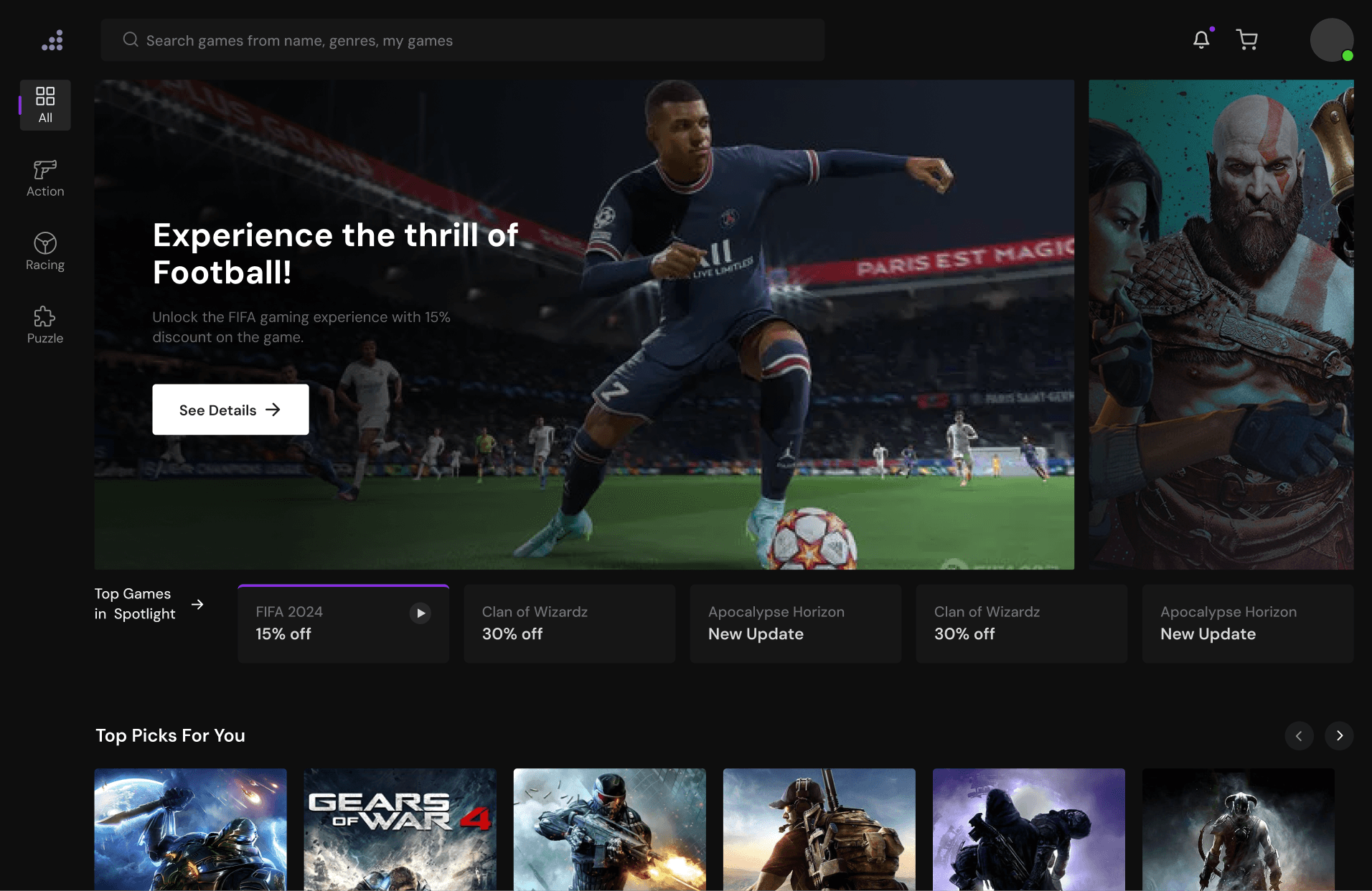
Initially, the dashboard was empty as it was in MVP stage. I had to architect a genre-based discovery system (Action, Racing, Puzzle, etc.) to ensure the marketplace felt "populated" and easy to navigate.
The Developer vs. Gamer Friction :
Designing two distinct experiences—one for the consumer (buying/selling) and one for the creator (uploading/monitoring sales)—within the same brand ecosystem.
Early-Career Optimization :
Learning how to build a scalable project using Component-Based Design early on, ensuring that as the MVP grew, the UI remained consistent.
Design Approach
The Gamer’s Marketplace (Consumer Side) :
To make the dashboard intuitive, I used a card-based layout for the game listings.
Genre Navigation: I implemented a top-level tab system for different genres to help users filter through the catalog quickly.
The Developer Portal (Creator Side) :
I designed a streamlined interface for developers to:
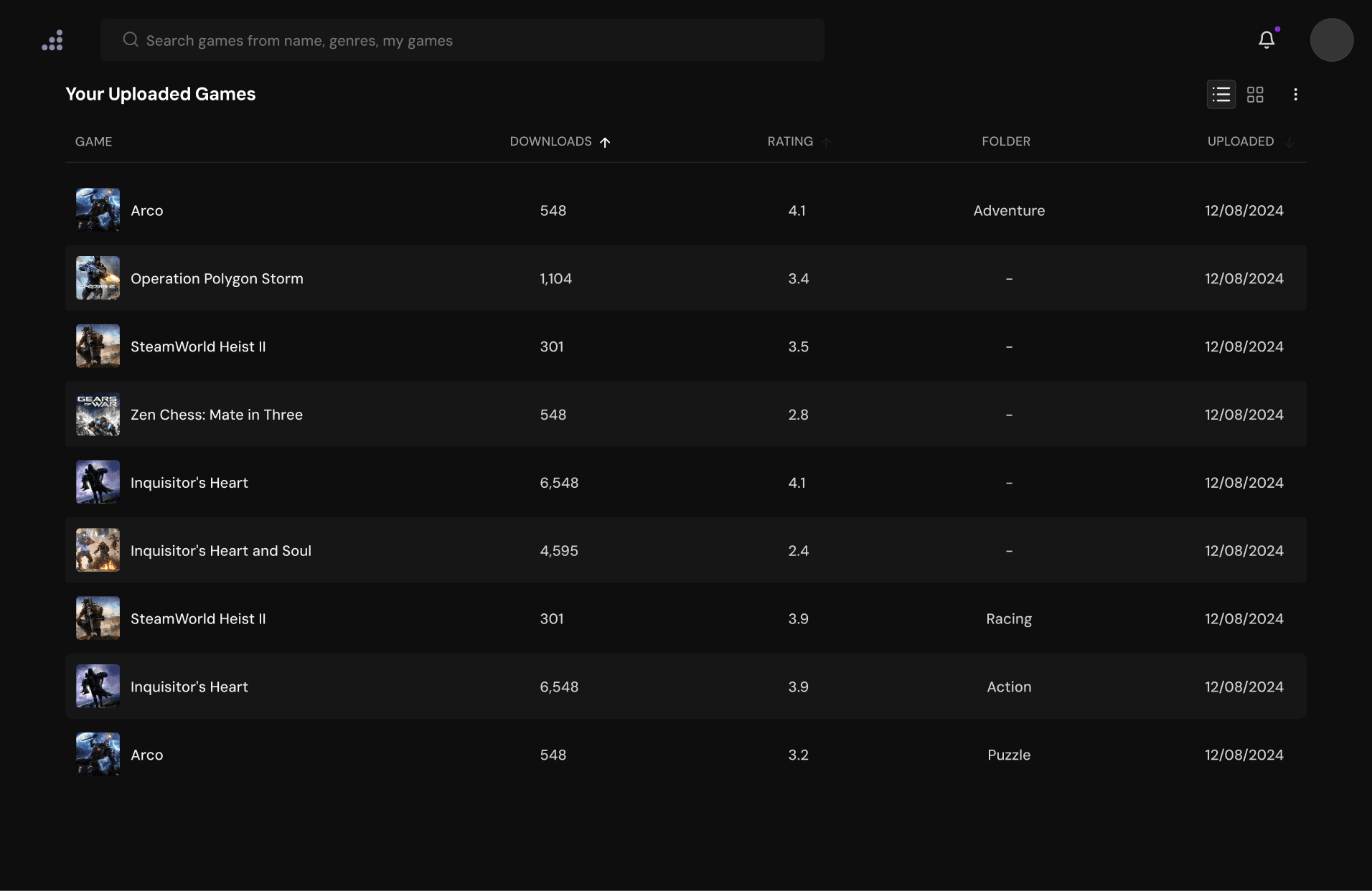
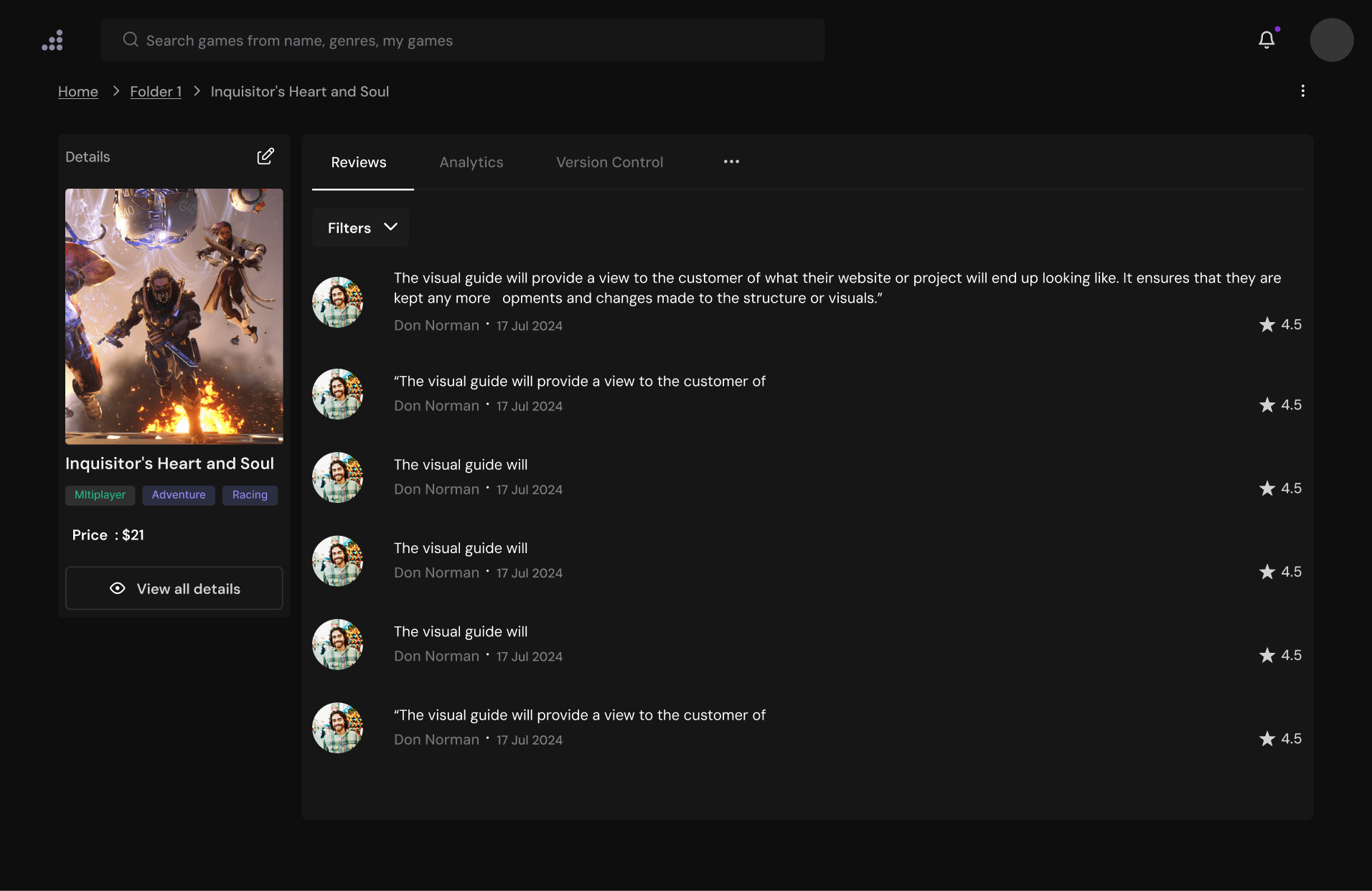
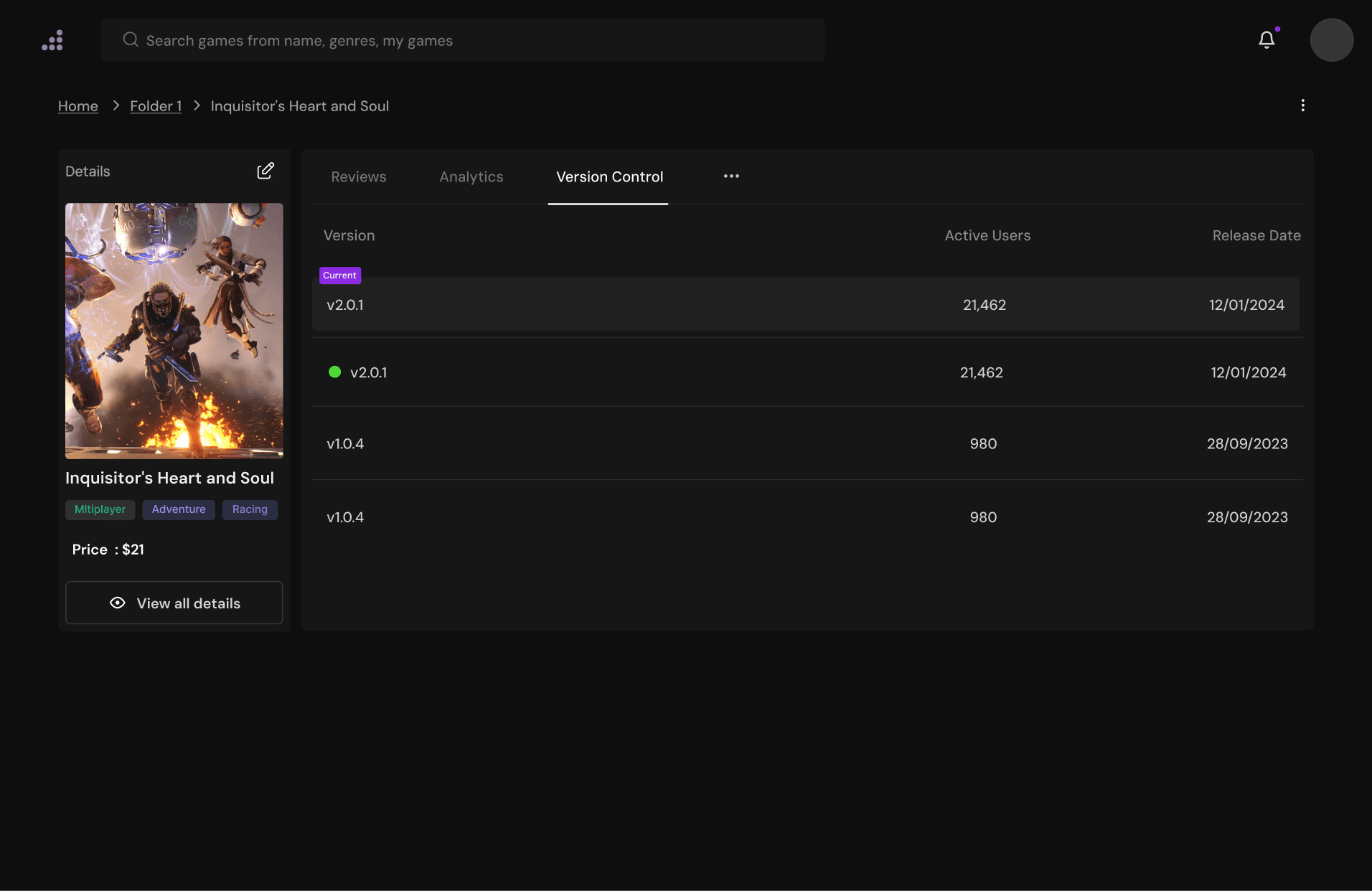
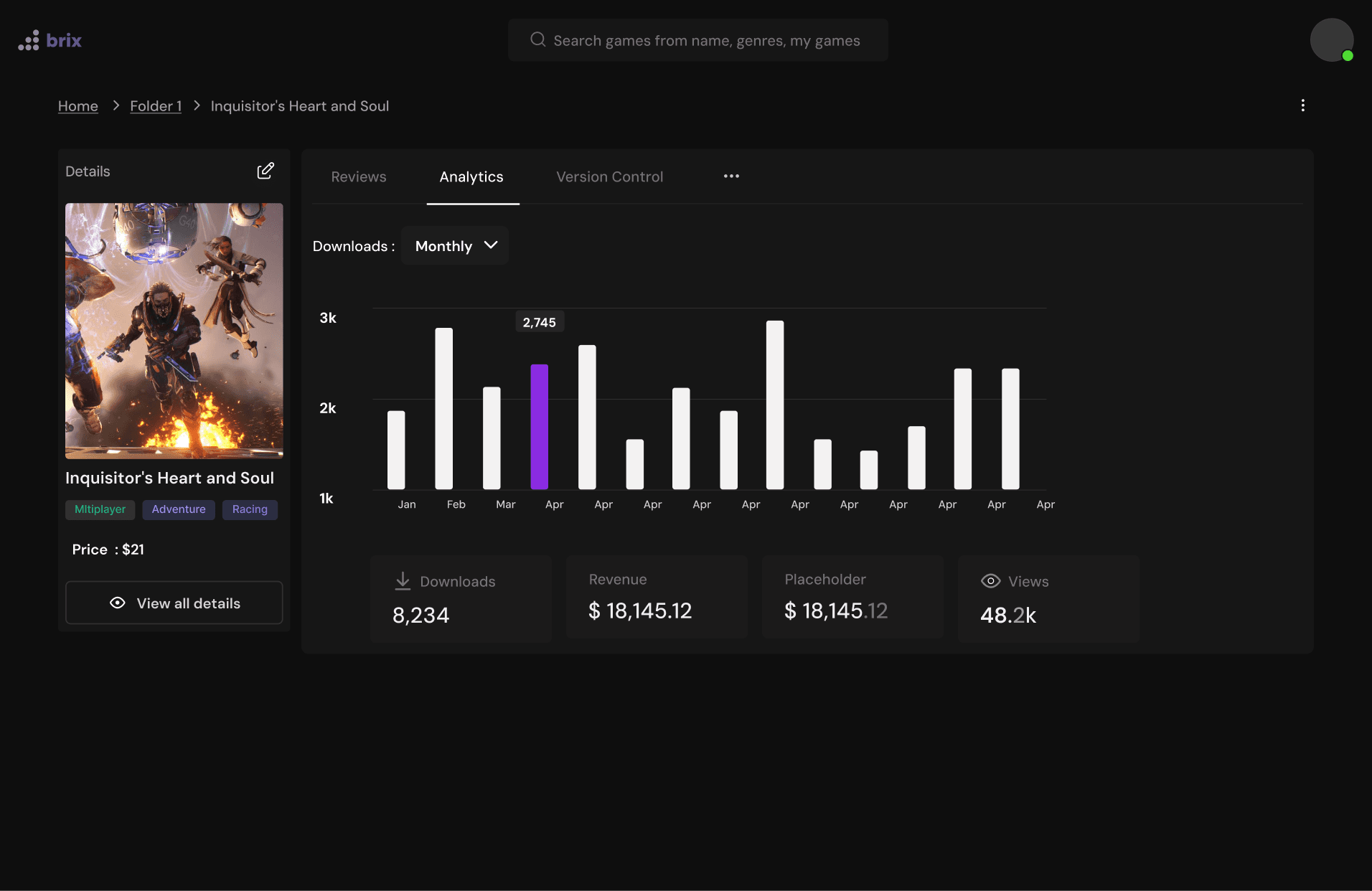
Deploy Games: A simple upload and metadata entry flow to get games onto the marketplace.
Sales Tracking: A basic dashboard to monitor how many "New" vs. "Resold" licenses were being transacted, providing developers with insights into their game's lifecycle.
Solutions
Genre-Centric Discovery :
By organizing the "empty" dashboard into specific categories like Action and Racing, I created a mental model for users to explore the library efficiently.
Standardized Component Library :
Despite being early in my career, I focused on creating a set of reusable buttons, cards, and input fields. This allowed me to build the landing page and the inner dashboard much faster while maintaining visual harmony.
Landing Page Strategy :
I designed a high-level landing page that focused on the unique selling point (USP): "Play. Finish. Resell." This helped explain the new concept to gamers who weren't used to digital reselling.
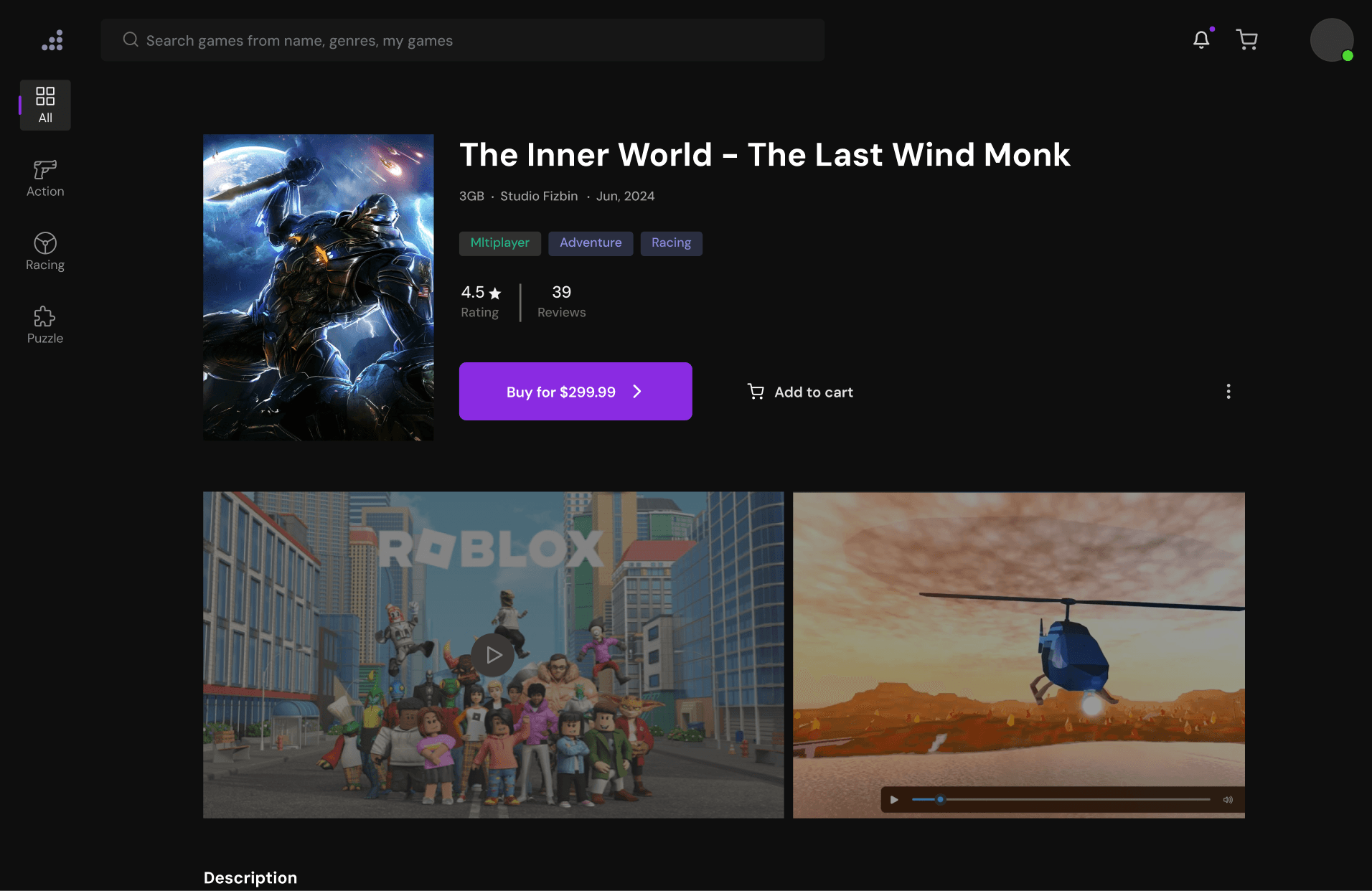
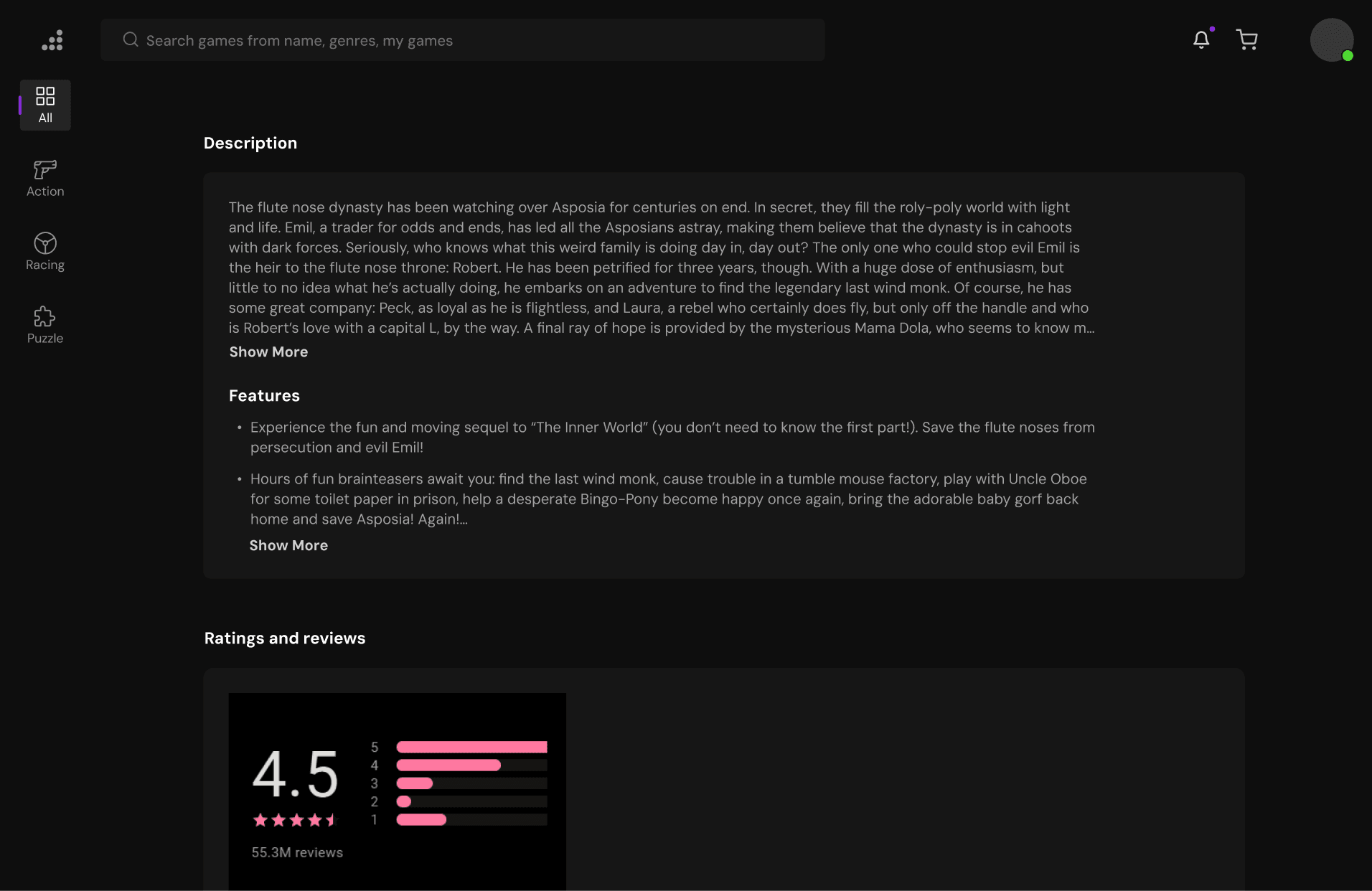
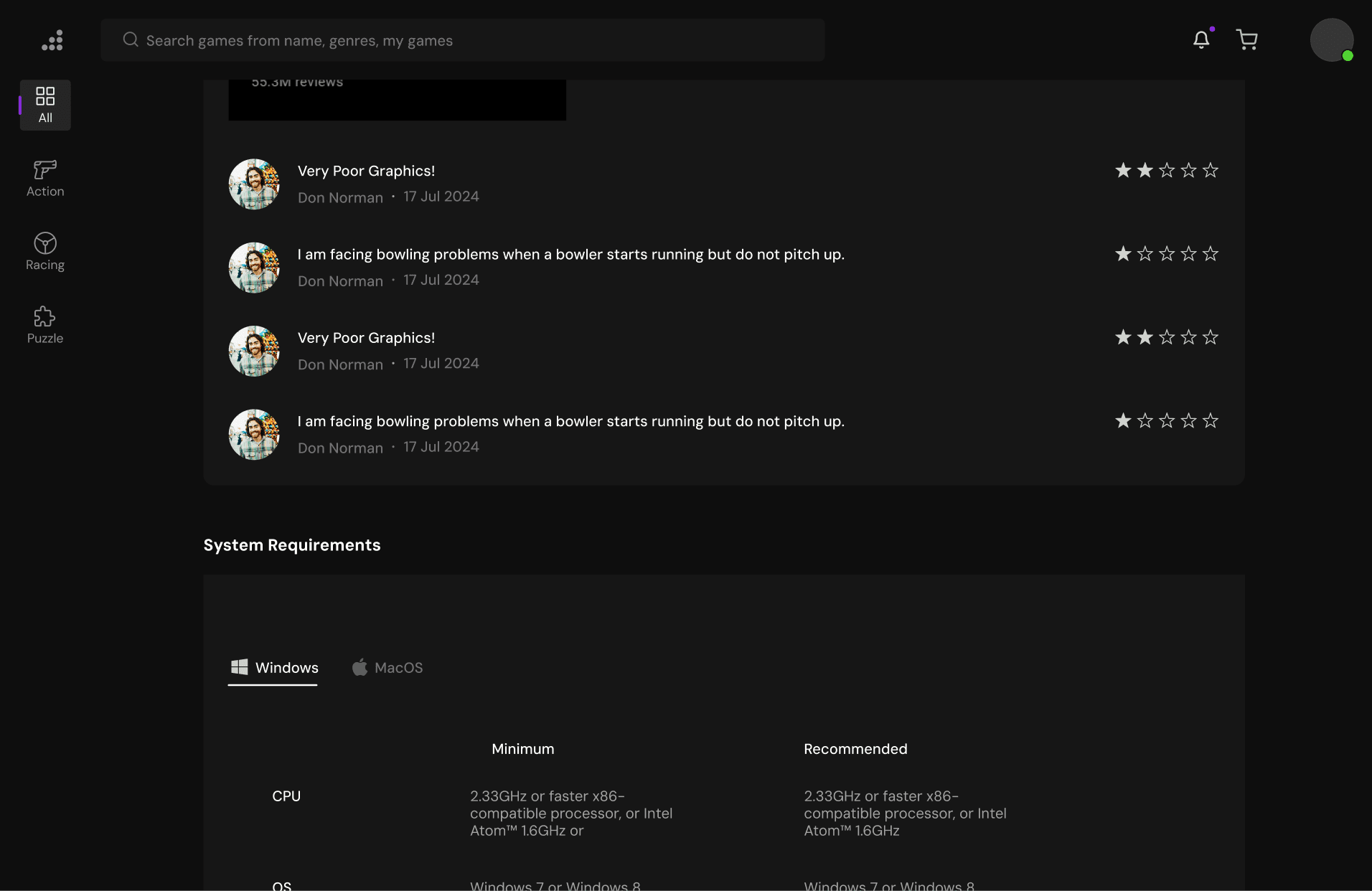
Player Side Screens
Gaming Developers Side
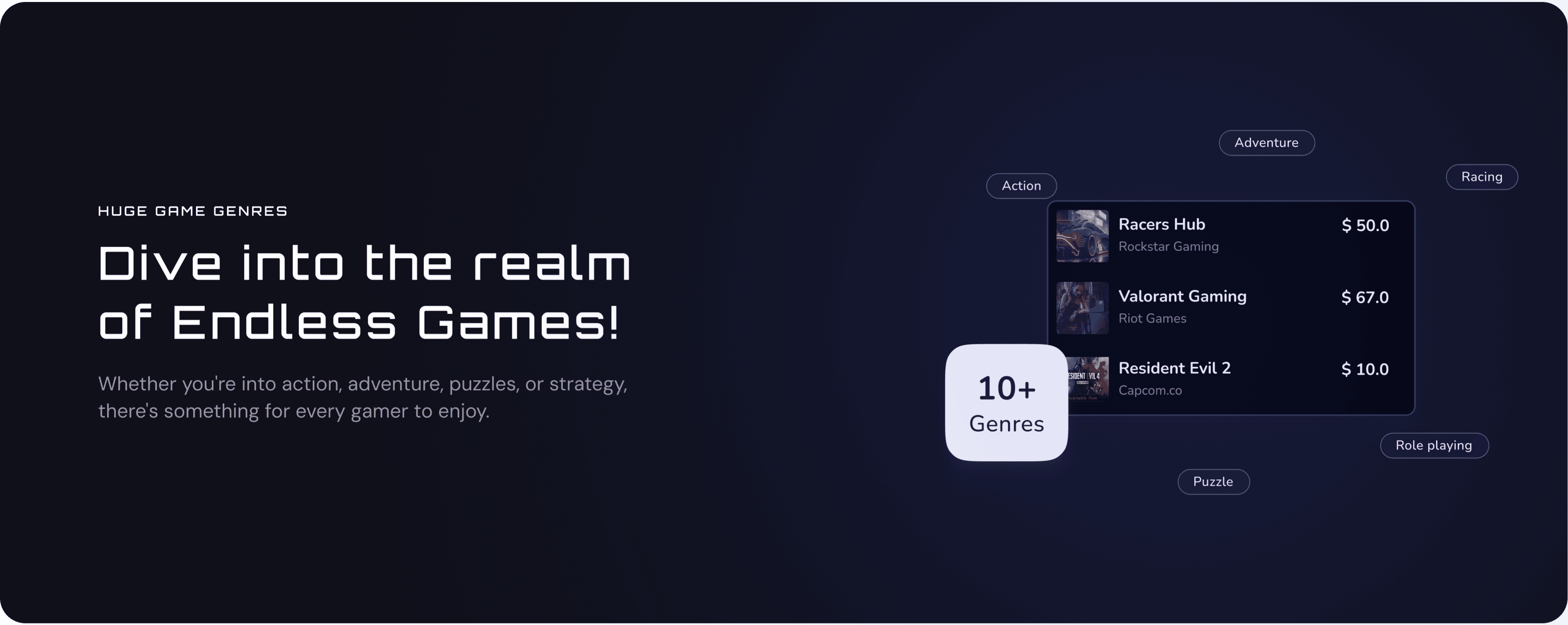
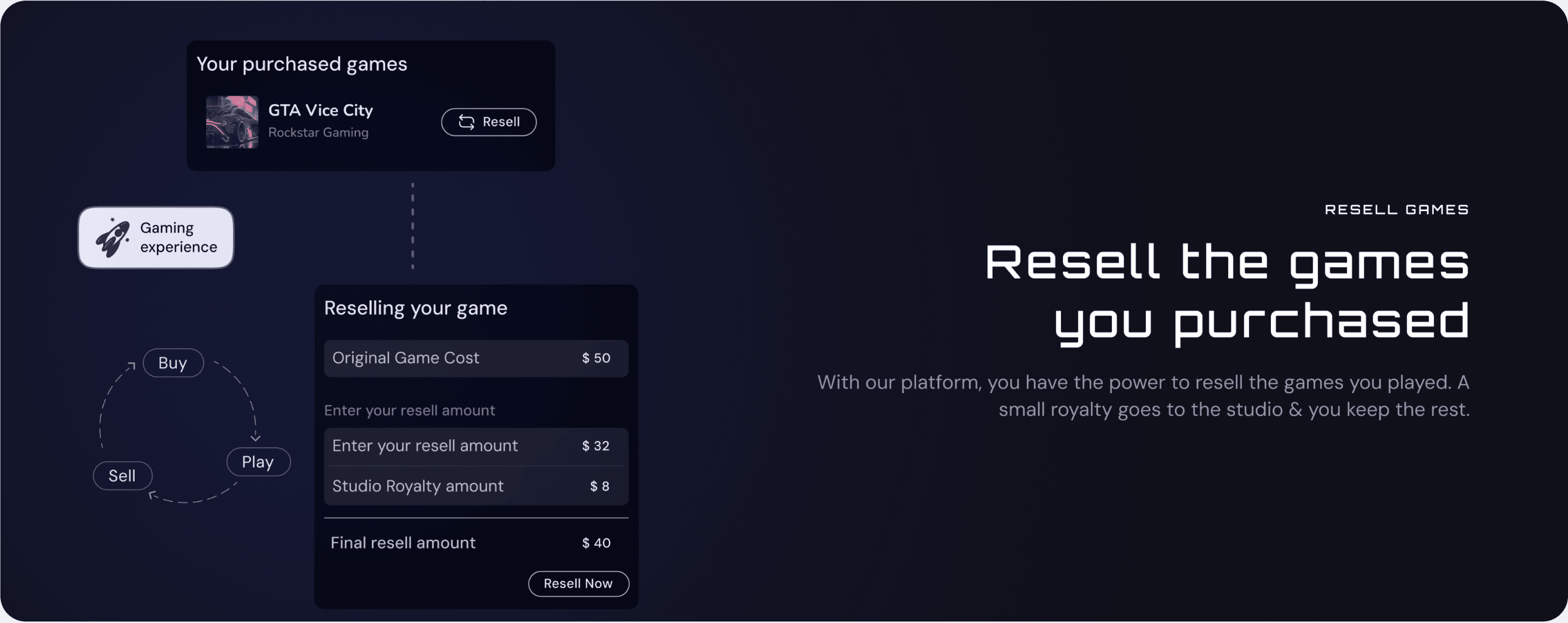
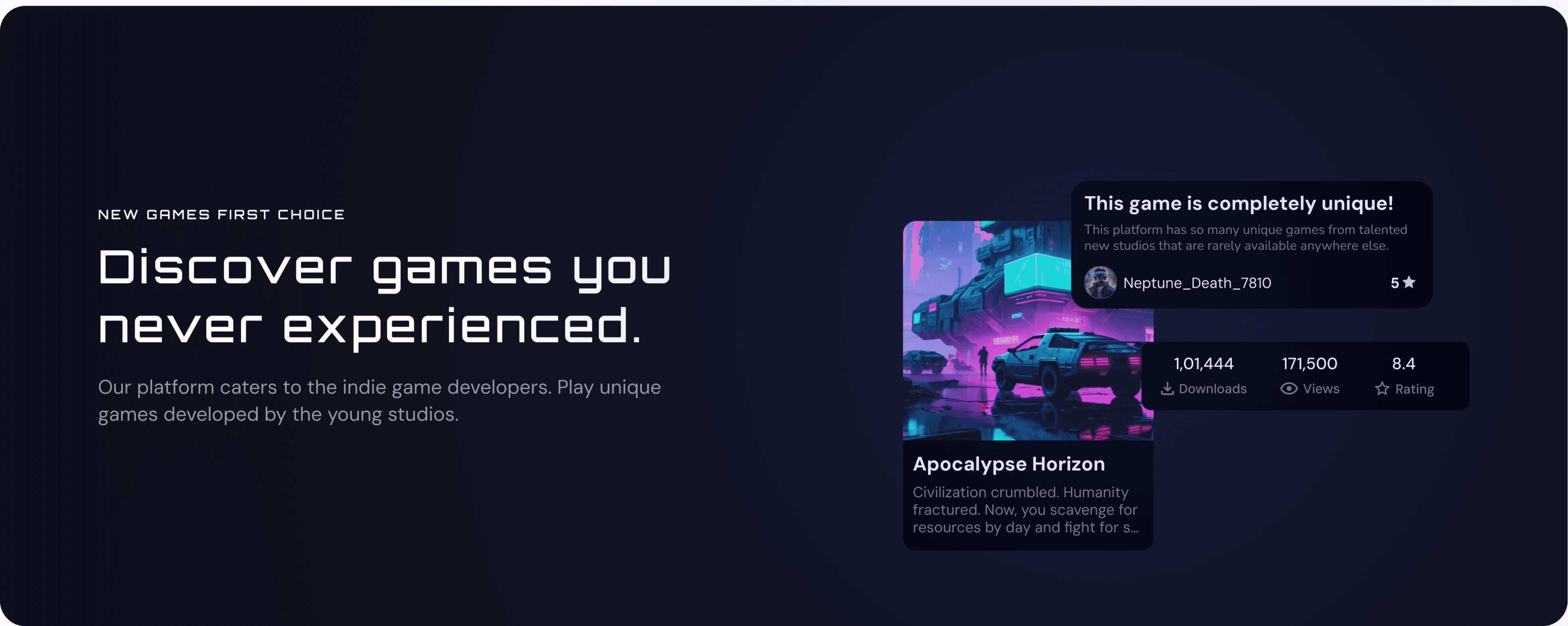
Landing Page Sections
Key Learnings
Adapting to the Web3 Learning Curve :
This project was my first introduction to Web3 and blockchain concepts, which was extremely new and challenging at the time. I had to quickly learn how "Digital Ownership" and "Smart Contracts" translated into a UI—specifically how to make a complex backend process like "license transferring" feel as simple as a traditional click-and-buy button for a non-crypto audience.
Systemic Thinking :
This was my first deep dive into Component-Driven Design. It taught me that a product isn't just a set of screens, but a system of parts that need to work together.
User Flow Mapping :
Designing for two different user types (Gamers and Developers) helped me understand how to pivot my perspective based on user goals.
Growth Mindset :
While I recognize this wasn't my "perfect" design work, it was the project that taught me the structural requirements of a marketplace and how to handle complex backend logic (like reselling rights) through UI.
Brief Context
This product was designed as a pioneering circular economy marketplace that introduced digital reselling to the gaming industry.
My role was to architect a dual-sided MVP where gamers could purchase titles and later "re-list" their digital licenses for other users, while providing developers with a streamlined portal to deploy games and track their lifecycle in the secondary market.
The primary challenge of this project was the "Reselling" hook. Unlike traditional platforms like Steam, where a purchase is permanent, this marketplace functioned more like a physical disc economy but in a digital format.
Challenges
Content Discovery :
Initially, the dashboard was empty as it was in MVP stage. I had to architect a genre-based discovery system (Action, Racing, Puzzle, etc.) to ensure the marketplace felt "populated" and easy to navigate.
The Developer vs. Gamer Friction :
Designing two distinct experiences—one for the consumer (buying/selling) and one for the creator (uploading/monitoring sales)—within the same brand ecosystem.
Early-Career Optimization :
Learning how to build a scalable project using Component-Based Design early on, ensuring that as the MVP grew, the UI remained consistent.
Design Approach
The Gamer’s Marketplace (Consumer Side) :
To make the dashboard intuitive, I used a card-based layout for the game listings.
Genre Navigation: I implemented a top-level tab system for different genres to help users filter through the catalog quickly.
The Developer Portal (Creator Side) :
I designed a streamlined interface for developers to:
Deploy Games: A simple upload and metadata entry flow to get games onto the marketplace.
Sales Tracking: A basic dashboard to monitor how many "New" vs. "Resold" licenses were being transacted, providing developers with insights into their game's lifecycle.
Solutions
Genre-Centric Discovery :
By organizing the "empty" dashboard into specific categories like Action and Racing, I created a mental model for users to explore the library efficiently.
Standardized Component Library :
Despite being early in my career, I focused on creating a set of reusable buttons, cards, and input fields. This allowed me to build the landing page and the inner dashboard much faster while maintaining visual harmony.
Landing Page Strategy :
I designed a high-level landing page that focused on the unique selling point (USP): "Play. Finish. Resell." This helped explain the new concept to gamers who weren't used to digital reselling.
Player Side Screens
Gaming Developers Side
Landing Page Sections
Key Learnings
Adapting to the Web3 Learning Curve :
This project was my first introduction to Web3 and blockchain concepts, which was extremely new and challenging at the time. I had to quickly learn how "Digital Ownership" and "Smart Contracts" translated into a UI—specifically how to make a complex backend process like "license transferring" feel as simple as a traditional click-and-buy button for a non-crypto audience.
Systemic Thinking :
This was my first deep dive into Component-Driven Design. It taught me that a product isn't just a set of screens, but a system of parts that need to work together.
User Flow Mapping :
Designing for two different user types (Gamers and Developers) helped me understand how to pivot my perspective based on user goals.
Growth Mindset :
While I recognize this wasn't my "perfect" design work, it was the project that taught me the structural requirements of a marketplace and how to handle complex backend logic (like reselling rights) through UI.

Vineeत्
